
here* is a weekly newsletter exploring how things tech, culture, the economy, and politics are changing the way we work. And how work is changing the way we live.
Let’s get into it.

This week:
Headlines: The World Cup is costing companies (whatevs) ⚽ and Mayor Mamdani appoints a Mom-and-Pop Czar (cute!) 🗽
Shortcuts: Handwriting is so good for us (let’s be pen pals, seriously) ✍
Good jobs: The Trevor Project, The Anxious Generation Movement, and GIFFORDS are all hiring.
Things I’m loving: You can live with Nuns in the Bronx! ⛪
The main bit: Life is all about good design. 🚪
Headlines & happenings
Work, life, and technology are ever-evolving (it’s exhausting). here* is the latest.

Patricia getting down in Apple TV’s Widow’s Bay
Shortcuts
There are only 24 hours in the day. here* are your weekly shortcuts.
Good jobs
I scour the job boards so you don’t have to. here* is a list of jobs that I think are really good.
The Anxious Generation is hiring a Social Media Manager. Ironic? Maybe a little. But if you’re passionate about responsible tech and low key love Jonathan Haidt, this is a really cool job.
The Trevor Project is looking for a Chief People Officer. This is a big job with high impact and great pay.
GIFFORDS is hiring a Program Manager. I know this team personally and can attest this would be a really great crew to work with, not to mention an incredible cause.
Have a good job you want added to the next issue, reply to this email!
Things I’m loving
The things I’m loving on the internet and likely won’t shut up about.

The main bit
The error was already there
There is a concept in systems safety research called latent error (that I admittedly discovered on Instagram). As I understand it, active errors happen in the moment, the nurse who administers the wrong medication, the pilot who pulls the wrong lever, and there is the error already present in the system long before anyone makes a mistake. The drug packaging that looked nearly identical to another drug. The lever that existed for no reason, identical to the right one, positioned directly beside it. The moment of failure is when the latent design finally surfaces.
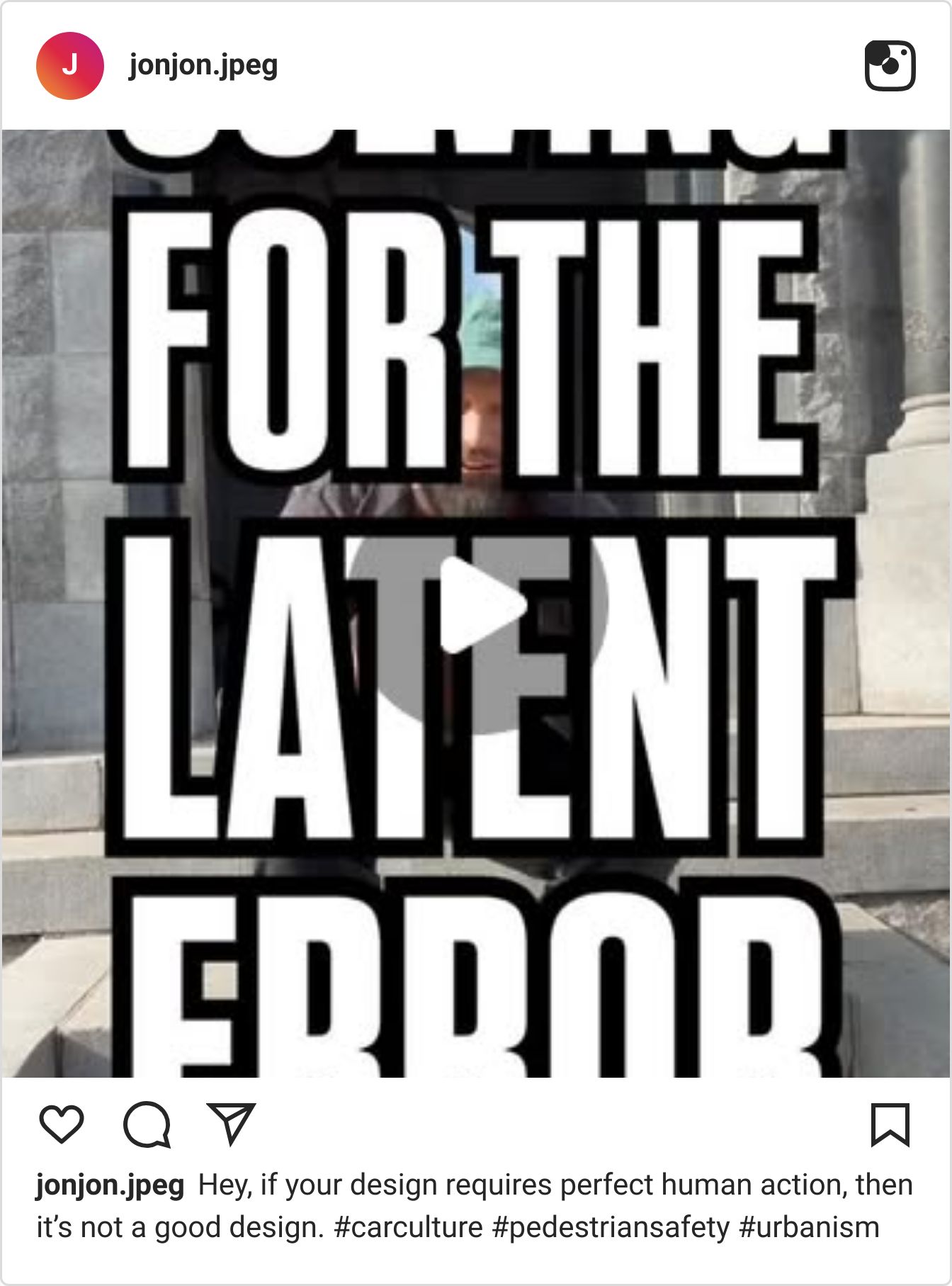
Put more simply (not by me but by design minds much smarter than me): if design requires perfect human action, it's not good design.
When things go wrong at work, most organizations are better at identifying who rather than what. When a team doesn't collaborate effectively, someone owns that. When a new hire takes too long to ramp up, that person’s ability to perform is in question. When a manager fails to develop their people, there's a conversation, maybe a PIP, maybe a termination. The system that makes any of those outcomes possible goes largely unexamined, partly because systems don't show up on an org chart and partly because fixing a person feels easier than redesigning a condition that's been largely invisible since the day it was built.
I don’t think organizations do this out of negligence. It's more likely that the person is visible and the condition isn't, and we tend to investigate what we can see. Which means the same problems keep surfacing in different people across different teams without anyone identifying what they have in common.
Here are a few patterns that keep appearing once you start looking upstream rather than at the person standing closest to the failure:
Visibility and access
Things that exist but aren't where you can see or reach them, so the behavior they're meant to support doesn't happen. The performance feedback tool that lives three clicks inside an HR platform most employees forget exists. The employee assistance program mentioned once during onboarding and never surfaced again, available in the technical sense and invisible in every practical one. The internal job board that requires a separate login from everything else, so internal mobility is theoretically encouraged and structurally discouraged at the same time.
Proximity mismatch
Things that need to work together aren't near each other, so the gap between them creates friction that compounds. Two contract templates, one current and one outdated, saved in the same folder and differentiated only by a date buried in the filename. The strategy brief template from last quarter and the one from this quarter living side by side in a shared drive, indistinguishable at a glance, so a team works from the wrong one without knowing until something doesn't match. The new hire whose laptop isn't ready on day one, so their first experience of the organization is waiting.
Default settings that work against you
The path of least resistance leads somewhere you didn't intend to go, because nobody deliberately set a better default. The meeting invite that can be sent to anyone without justification, so calendars fill by default rather than by design. Slack notification settings that ship as everything-on, so people either mute the whole thing or get interrupted constantly with nothing in between. The reimbursement process with a five-step submission form for a twelve dollar lunch, so people stop submitting and the budget process breaks.
Accumulation without a system
Things collect without a process attached, so the pile is doing the work a structure should be doing. The approval chain for a decision that touches four people, none of whom owns it, so it moves slowly and arrives changed in ways nobody fully traces. The recurring all-hands that started when the team was eight people and still runs now that it's forty, with an agenda that no longer fits the room. The onboarding checklist that looks identical for every role but was built for a different one, so new hires complete the steps without gaining the context the steps were meant to build.
Invisible friction on desired behaviors
The things you actually want to do have more steps than the things you don't, so the choice is made before you make it. The internal promotion process that requires more documentation than an external hire, so managers default to recruiting outside. The mentorship program that exists on paper but has no protected time attached to it, so it becomes another thing people intend to prioritize and don't. The feedback culture that encourages candor but routes all formal feedback through a manager, so candor and self-preservation end up in direct tension.
Design that produces the opposite of its stated intent
The policy or structure was meant to create one thing and produces another. The open plan office designed for collaboration that makes focus impossible, so people wear headphones to signal unavailability or leave the building to think. The hybrid schedule meant to bring people together where nobody coordinates which days they come in, so the people who show up sit next to a different group every time. The annual review designed to develop people that arrives too late to change anything about the year being reviewed. The ninety day probationary review that exists not because ninety days is when anything meaningful can be assessed, but because that's when the calendar reminder fires and the form exists.
Signals without differentiation
Everything arrives looking equally urgent, so nothing actually is, and attention becomes the thing being mismanaged. The Slack workspace where critical project updates live in the same visual format as lunch plans, indistinguishable until something is missed. The calendar invite for a required meeting and an optional one that arrive looking identical, so attendance becomes a guessing game. The performance rating scale where a three means different things on different managers' rubrics, so the same number lands differently depending on who built the form.
What makes latent error genuinely difficult to address is that most of these conditions were designed by someone who was trying to solve a different problem. The all-hands made sense at eight people. The approval step was added after something went wrong. The onboarding checklist was built carefully, for a role that no longer quite exists. The intentions were good. The conditions they created outlasted the problems they were meant to solve, and nobody was watching for that.
I'm not a systems safety researcher, and I may be stretching the idea a bit. Still, I keep coming back to it, wondering whether I spend too much time looking at the moment something goes wrong and not enough time looking at what made that outcome more likely.
I'm curious what other people are noticing, at home or at work or in life. If something in your environment is producing an outcome you didn’t actively choose, I'd love to hear about it.
That’s all for this week.
I’ll be back in your inbox again soon. Until then, I’d love to hear from you. Let me know what content you liked or what you’d like to see more of in the next issue. You can reply to this email for a direct response from me.
<3
Meg