
here* is a weekly newsletter exploring how things tech, culture, the economy, and politics are changing the way we work. And how work is changing the way we live.
Let’s get into it.

This week:
Headlines: Stephen Colbert wraps his late night run, Pope Leo weighs in on AI, and having neighbors is so back. 🧑🤝🧑
Shortcuts: Meditating on impermanence and looking at art 🖼
Good jobs: The American Journalism Project, Protect Democracy, and Emerge Career are all hiring! Hence forth and check out the good jobs they have open now. 🤑
Things I’m loving: Pema Chodron’s deep wisdom and a very special gallery coming next week to the near east side of Indianapolis ✍
The main bit: For many, life is more convenient than ever. So why do things still feel a little bit off? Let’s talk about convenience culture, “friction-maxxing”, and what it means to really have a choice. ☀
Headlines & happenings
Work, life, and technology are ever-evolving (it’s exhausting). here* is the latest.
Stephen Colbert tapes his final episode of The Late Show: For some he left a legacy. For others, he left a gap in broadcast television: making it normal for candid and honest conversations to happen on TV, examining the hardest parts of being a human. In a media environment built around performance, detachment, and often rage bait, Stephen Colbert’s humanity felt really nice.
Pope Leo weighs in on AI and humanity: Pope Leo XIV released his first encyclical centered on artificial intelligence, framing AI not simply as a technology issue but as a question of human dignity, labor, power, and what it means to remain human in an increasingly automated world. The document reads less like a warning about robots and more like a critique of a culture overly organized around efficiency, optimization, and control.
Being and having good neighbors is so back: Not that it ever really went anywhere but “neighborism” as it’s been termed is having a moment, after decades of hyper-individualism and digital life untethered from place, people are rediscovering the practical and emotional value of proximity. “Neighborism” frames local relationships less as wholesome nostalgia and more as necessary infrastructure in a fragmented world.

The neighbors I always imagined having when I was growing up ❤ and spoiler: I do have them now.
Shortcuts
There are only 24 hours in the day. here* are your weekly shortcuts.
A comic strip to help with habits (the good kind): A useful (and adorable) reminder that sustainable habits tend to emerge less from discipline and more from reducing psychological thresholds, lowering the barrier for starting, and designing systems that work with our behaviors instead of against them.
Creative meditation on impermanence: A beautiful reflection on impermanence, creativity, and the emotional tension between wanting to preserve life exactly as it is while knowing that transience is what gives it meaning in the first place.
Feeling meh? Look at art: Megan O’Grady’s book explores modern life through longing, beauty, art, attention, and emotional perception. The broader cultural mood around the book feels notable: a growing appetite for work that resists optimization and instead tries to make sense of what it actually feels like to exist right now.
Good jobs
I scour the job boards so you don’t have to. here* is a list of jobs that I think are really good.
The American Journalism Project is reimagining local news as a public good - and they’re hiring. Check out some of their open jobs here.
Our friends at Protect Democracy are quite busy (as you’d imagine!). Check out their open jobs here. (And subscribe to Democracy Notes if you’re not already for job alerts across the US democracy landscape!)
Emerge Career is hiring across departments! Their mission is to break the cycle of poverty and incarceration by creating pathways and second chances.
Have a good job you want added to the next issue, reply to this email!
Things I’m loving
The things I’m loving on the internet and likely won’t shut up about.
Pema Chodron talking with Ezra Klein: This is a beautifully windy interview I listened to over the weekend about what happens when we agree with our anxiety rather than push it aside.
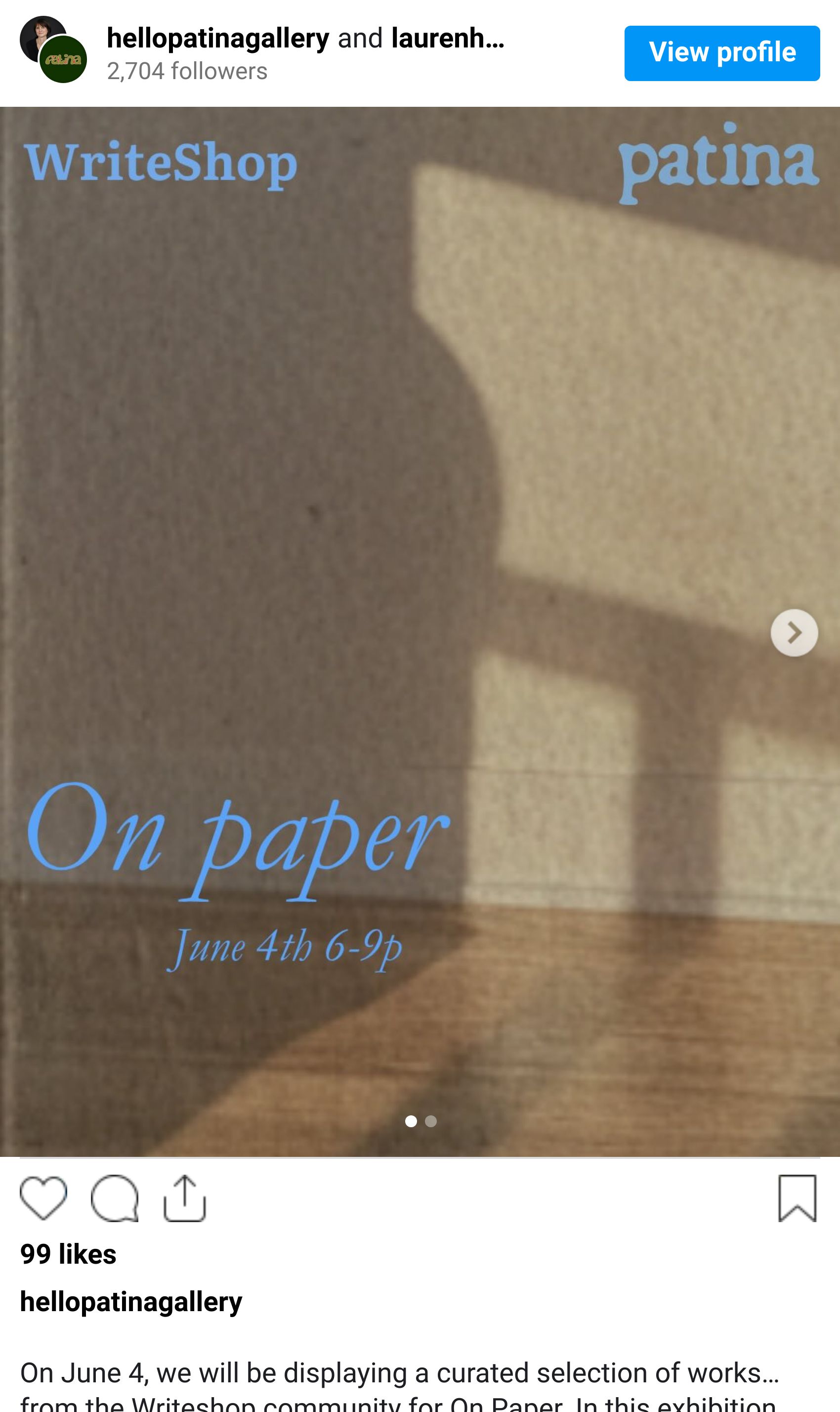
A writing + gallery space collaboration: This is a really special event near and dear to my heart, soul and community. On paper is a curated exhibit at patina gallery on the near east side of Indianapolis. An ode to WriteShop, a community gathering I’ve been a part of for some time, hosted by a dear, dear friend, Lauren Day. The gallery will feature selected writings from past gatherings and we’ll even have a special writing workshop in the patina art gallery space on June 5 which will be so lovely. If you are in Indianapolis, please join! More info on the event, WriteShop, and patina gallery can be find in below 🫶
The parts worth keeping
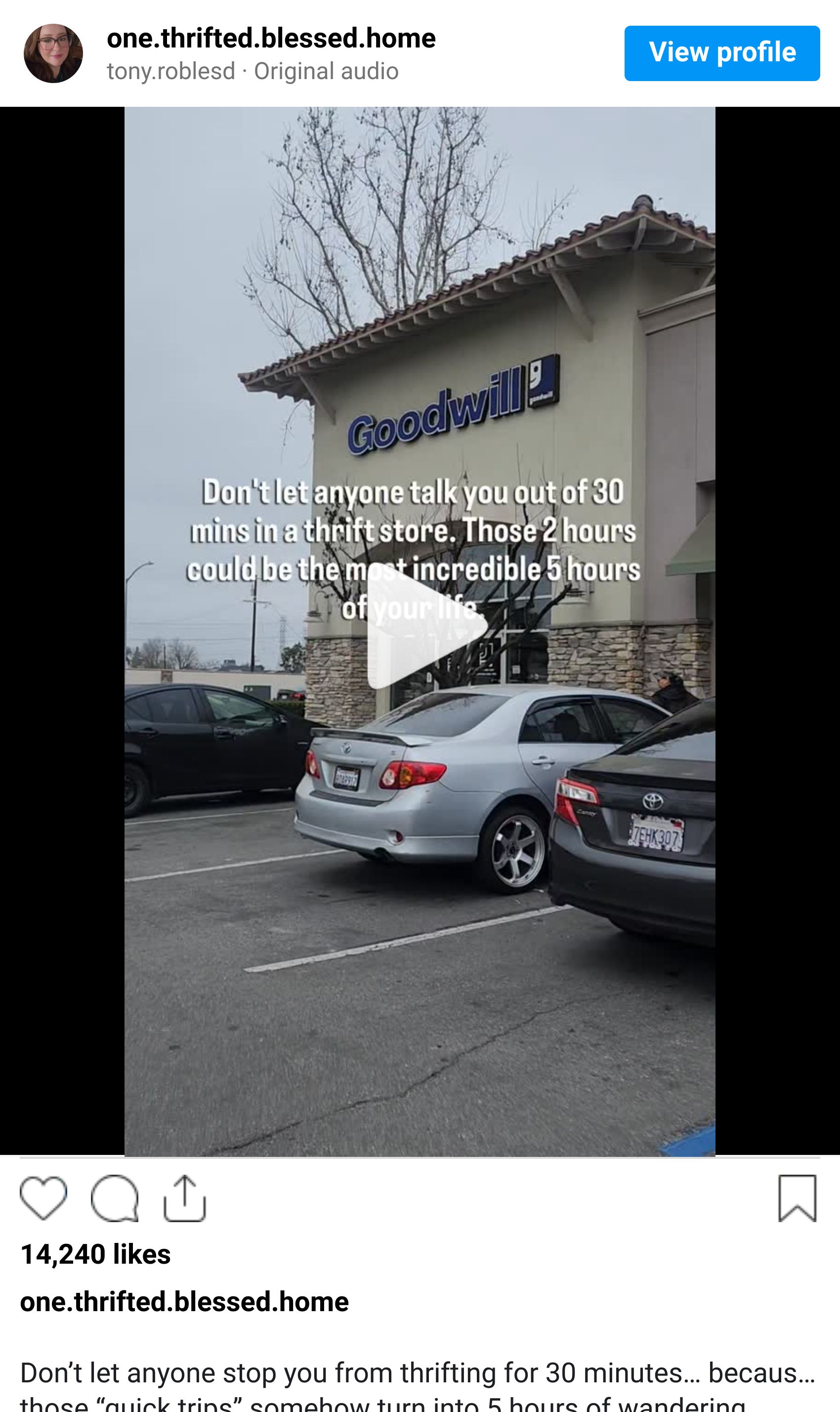
For the past 6 months, I have been furnishing my new (to me, old to the world) house the slow way. Thrift stores mostly, estate sales, yard sales, and of course Facebook Marketplace, which has sent me to neighborhoods I would likely never have visited otherwise. Corners of my city I had no reason to go to until a kitchen table or an antique lamp or a haul of free houseplants gave me one. I have stood in strangers' garages, yards, and living rooms, negotiated over text with people I will probably never meet again, and sent photos of finished rooms to sellers who didn’t ask to know how their old things were doing in their new home but I had to share anyway.
It’s taken considerably longer than clicking the ‘add to cart’ button and waiting for the shipment of home goods to arrive but it’s also returned something kind of wonderful, a residual feeling that these frictionless transactions, for all their genuine and undeniable convenience, tend not to leave behind.

Convenience culture made us a pretty clear promise —> to remove the effort in everyday tasks and give us our precious time back. But I’m sitting here wondering where that “time rebate” is and what it’s actually cost. The waiting, the wandering, the conversation with a stranger, the satisfaction of arriving somewhere I never intended to go, the (intentional “bebop” if you will) these losses were never part of my plan. There was a texture to doing things the long way. And when that texture disappeared, there was no notification. No moment of loss. Just a life that had become, incrementally, a little more frictionless and a little less interesting.
The friction-maxxing conversation does tend to assume, however, a starting point that not everyone shares. It imagines a person who has fully arrived at convenience and is now thoughtfully opting out of it. For a significant portion of people, that arrival never happened. Inconvenience was not something they optimized their way into as a lifestyle choice. It was the texture of their daily lives, unremarked upon, uncelebrated, and not especially romantic.
Chosen friction has a different quality. It is the long way that teaches you something, the slow process that leaves a residue of satisfaction, the inconvenience that turns out to have been the point. I have been thinking about this at work as much as at home. There is a growing desire to automate the parts of work that feel repetitive or time consuming. The summary, the briefing, the first draft, the scheduled update. But some of what gets automated in that process is not the repetitive part. It is the thinking. The discernment. The act of forming a point of view and finding the words for it. I know someone who is looking for an AI tool to automate her voice so she can receive daily briefings of her own perspective. I have been turning that over for weeks. What she is describing is not a productivity solution. It is the removal of herself from her own work.
Convenience has made a lot of daily life easier, to be clear. I wouldn’t want to romanticize inefficiency or even genuine hardship. But I do think something changed when nearly every errand, interaction, and task started becoming optimized for speed.
There are certain experiences that seem worth the effort if time allows. Wandering through a thrift store for an hour (or five). Getting lost in a neighborhood on your way somewhere. Sitting with writing a difficult paragraph until you finally know what you are trying to say. Figuring out which friction belongs to you.
That’s all for this week.
I’ll be back in your inbox next week. Until then, I’d love to hear from you. Let me know what content you liked or what you’d like to see more of in the next issue. You can reply to this email for a direct response from me.
<3
Meg